
In 2025, the Malaysian government decided to restart the search for MH370, looking for the missing flight. This was not only due to the mystery surrounding the incident, but also because of the Malaysian government's determination and underlying motivations. On March 8, 2014, Malaysia Airlines Flight MH370, carrying 239 passengers, mysteriously disappeared from radar surveillance. Eleven years have passed since then, and the truth behind it remains elusive. However, what is noteworthy is the Malaysian government's decision to invest heavily in restarting the MH370 search, signing a no-fee agreement. This decision has attracted global attention.
◉ Background and Objectives
This restart of the search is not merely a revisit to the missing flight, but a courageous exploration of the unknown. In this operation, the Malaysian government hopes to use the power of modern technology to unveil the mysteries of this long-standing enigma.
◉ Hard Data and Speculation
First, let's look at undeniable hard data. This data, confirmed by governments worldwide, is undeniable: at 1:21 AM, the aircraft's transponder suddenly shut down, followed by the aircraft's bizarre return. Radar data from Malaysia, Thailand, and Vietnam all indicate that MH370 made a 180-degree turn at this crucial juncture, altering its original route to Beijing and instead heading towards the Strait of Malacca.
Frequent flyers may know that airplanes don't normally make such sharp turns without reason; it's like suddenly making a U-turn while driving on a highway—extremely unusual. Furthermore, satellite data shows the aircraft was last seen in the southern Indian Ocean, an even more bizarre development. Satellite records from the British company Inmarsat show that MH370 made its final satellite interaction at 8:19 AM Malaysian time, its location approximately near the 7th arc of the southern Indian Ocean. These data have been repeatedly verified and are difficult to falsify.
◉ Key Data Analysis
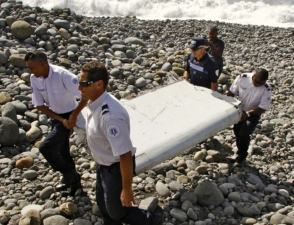
At the critical moment of MH370's disappearance, the aircraft's transponder and communication systems failed, followed by radar data showing the aircraft turning towards the southern Indian Ocean. This series of data became key to solving the mystery. Officially, only three pieces of MH370 debris have been confirmed, including wing flaps and wingtips.
◉ Possible Speculations
Based on available data, it is speculated that MH370 may have experienced human intervention or some kind of technical malfunction, leading to the loss of control. These speculations increase the complexity of the incident and provide a reasonable basis for restarting the search. The transponder and communication system failed within a minute of each other, making a synchronous hardware failure in this situation almost impossible. Such an event, like simultaneous problems with Wi-Fi and cell phone signals at home, is extremely rare, thus the probability of human intervention is relatively high.
The aircraft may have entered "zombie mode." Satellite tracking shows that after the transponder and communication system failed, the aircraft continued to fly south in autopilot mode, maintaining a speed of Mach 0.74. The cabin may have experienced slow depressurization. Due to the complete radio silence, only a few passengers' cell phones briefly connected to base stations but did not send out distress signals.
◉ Modern Aviation's Trust Challenge
In delving deeper into this incident, we face a more profound question: despite decades of accumulated safety redundancy technologies and systems in the modern aviation industry, why are such incidents still not completely preventable? The reason is that when all trust is concentrated in the single element of the cockpit, any technological redundancy can be intentionally or unintentionally circumvented.
◉ Hope Brought by Technological Advancement
With continuous technological advancements, we welcome new hope for 2025. Technological progress provides us with more solutions.
- Ocean Infinity Exploration
With the rapid development of technology, Ocean Infinity has once again embarked on a new underwater search journey. This marks their third consecutive year of efforts to unravel the mysteries of the deep sea, each time dedicated to bringing more surprises and discoveries about the ocean to humanity. Ocean Infinity is using the advanced HUGIN Endurance unmanned submersible, which has an endurance of up to three weeks and can scan more than 1,000 square kilometers of ocean area per day.
- Application of WSPR Radio Echo Technology
WSPR radio echo technology is an advanced signal tracing technology that helps search teams pinpoint the exact location of signal sources. By analyzing drift data from global amateur radio links, we can reconstruct the aircraft's flight path between 18:28 and 19:00. If this technology proves effective, the search area could be reduced by 40%.
- AI Drifting Inference Technology
By using artificial intelligence to deeply analyze years of ocean current data, we can attempt to deduce the possible crash site of the aircraft from the location where the wreckage was found. This technology reveals a profound truth: in this complex modern world, humans often become the most uncontrollable factor. The MH370 incident is a cruel example, telling us that even with huge investments in building the safest aircraft and designing numerous safety measures, it can still be destroyed by human factors in an instant. This is not a conspiracy theory, but a harsh reality we must face. Therefore, when we travel by plane, besides relying on advanced technology, what else can we trust?